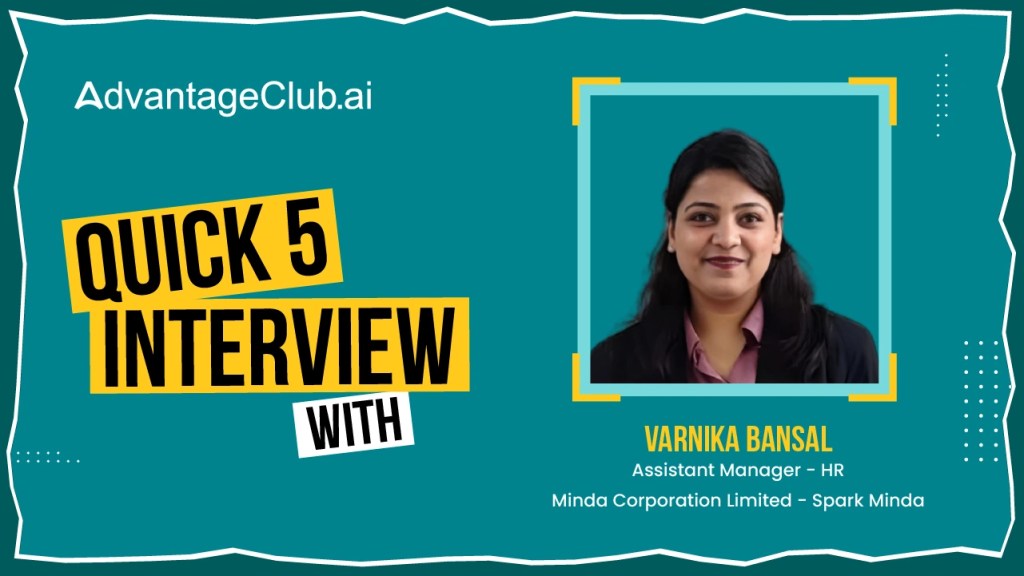
We are in a world of work where technology can predict outcomes but cannot replicate empathy. Today, HR leaders face a profound question: How do we scale human connection without losing its soul? For the manufacturing (automotive) sector—a world defined by rigid timelines and technical precision- this challenge is even more acute. True engagement is no longer about the occasional perk; it is about building an ecosystem that is as resilient as it is personal.
Q1: You’ve likely faced challenges that tested your resolve in your career. What is one piece of advice or a life lesson that has helped you overcome difficult moments?
A1: One principle that has consistently guided me is approaching every responsibility with full dedication and thoroughness. I believe that giving your best effort builds the confidence needed to navigate even the most demanding situations effectively.
I also place a strong emphasis on continuous learning and collaboration. When faced with unfamiliar challenges, I actively upskill myself and maintain emotional balance by staying objective. Above all, I believe in resilience—rather than dwelling on setbacks, I focus on learning from them and staying open to new experiences to ensure consistent personal and professional growth.
Q2: Personalized rewards are becoming the norm. How do you see the next generation of R&R systems evolving, and how can engagement tools help companies stay ahead?
A2: Today’s workforce brings diverse mindsets and motivations; what drives one employee may not motivate another. Consequently, the next generation of R&R systems must be more flexible and data-driven. We are moving toward a mix of monetary and non-monetary rewards, real-time recognition, and customizable benefits.
Employee engagement tools are critical for providing insights into behavior and preferences. However, their effectiveness depends on thoughtful implementation. When used strategically, these tools help deliver meaningful, personalized experiences. Without that intent, they risk becoming a routine “checkbox” activity.
Q3: AI is increasingly playing a critical role in employee well-being. How do you see AI-powered platforms shaping the future of workplace wellness and recognition?
A3: AI is making support more accessible and proactive. These platforms can identify patterns related to stress or workload, enabling timely interventions before issues escalate. In terms of recognition, AI enables real-time, data-driven appreciation by tracking milestones and peer feedback, ensuring contributions never go unnoticed.
However, while AI is a strong enabler, it cannot replace the human element. Workplace wellbeing requires empathy and genuine intent. The most effective approach is to use AI as a support system while prioritizing personal interaction and human understanding as the driving force.
Q4: Gamification is on the rise. What role do gamified programs play in the future, and how can technology and AI enhance this experience?
A4: Gamification adds an element of thrill to routine work, making employee engagement more interactive and enjoyable. It has immense potential to drive healthy competition and consistent performance. The key to its success, however, is sustaining that excitement over time so it doesn’t become repetitive.
Technology and AI enhance this by personalizing challenges and tracking performance in real time. AI can continuously refresh content and identify participation trends to keep employees motivated. When designed thoughtfully, gamification creates a truly dynamic employee experience.
Q5: In a hybrid and remote world, how do you foresee maintaining high engagement and recognition for dispersed teams?
A5: Maintaining engagement in a hybrid world requires a more intentional and structured approach. We need to create consistent touchpoints using virtual platforms such as Microsoft Teams and Slack, as well as interactive tools like Kahoot and MentiMeter, to bring teams together for informal connect sessions.
AI-powered solutions enhance this by enabling seamless communication and helping managers identify engagement gaps. They ensure inclusivity across dispersed teams, ensuring that remote employees feel just as valued as those in the office. Ultimately, technology is the enabler, but the impact comes from building genuine connections and maintaining consistent recognition across the board.
Varnika Bansal’s perspective highlights a critical truth for the modern HR professional: technology provides the scaffolding, but leadership provides the heart. By merging AI-driven precision with the resilience of human connection, organizations can move beyond transactional management into a future of deep, individualized engagement.
Stay tuned for more insights from our guests in this Quick 5 Interview Series!
What is an AI-powered employee recognition platform and how does it work?
An AI-powered employee recognition platform uses machine learning to detect meaningful contributions across daily work, then triggers timely, personalized appreciation moments that reinforce the right behaviors at the right time. It analyzes activity patterns, peer nominations, and performance signals to surface recognition-worthy moments that busy managers often miss during the week. AdvantageClub.ai automates nudges, applies fairness checks to reduce bias, and connects recognition to company values in real time. The system integrates natively with Microsoft Teams, Slack, and HRIS platforms including Workday, SAP, Oracle Fusion, and Darwinbox, so appreciation flows into the tools employees already use, keeping engagement natural rather than forced.
I also place a strong emphasis on continuous learning and collaboration. When faced with unfamiliar challenges, I actively upskill myself and maintain emotional balance by staying objective. Above all, I believe in resilience—rather than dwelling on setbacks, I focus on learning from them and staying open to new experiences to ensure consistent personal and professional growth.
How can HR teams personalize rewards and recognition for a diverse workforce?
Personalization begins with employee data, active listening tools, and genuine choice at the point of redemption. Effective programs blend monetary and non-monetary rewards, offer localized catalogs, and let people pick experiences that match their life stage, cultural background, and personal interests. AdvantageClub.ai supports this with a global rewards marketplace, points-based redemption across 100-plus countries, and preference intelligence that adapts to each user over time. Managers get clear insight into what motivates each team member, which prevents the checkbox effect Varnika Bansal warns about and turns recognition into a genuinely individual, memorable experience for every employee.
How does gamification improve employee engagement and performance?
Gamification uses game mechanics such as points, levels, badges, and leaderboards to make everyday work feel more rewarding and purposeful. It encourages healthy competition, reinforces desired behaviors, and gives employees quick feedback on their progress toward personal and team goals. AdvantageClub.ai builds gamification into wellness challenges, recognition streaks, and sales contests, refreshing themes regularly so momentum does not fade over time. AI personalizes each challenge based on role and preference, tracks participation trends, and flags early signs of disengagement. Done well, gamification lifts adoption of core programs and turns engagement from a top-down mandate into something employees actively choose.
What is the best way to keep hybrid and remote teams engaged?
The strongest hybrid engagement strategies mix consistent recognition, structured touchpoints, and inclusive communication across every location and time zone. Managers need visibility into who is falling out of the loop, and employees need frequent, low-friction ways to be seen for their contributions during the week. AdvantageClub.ai enables real-time recognition inside Microsoft Teams and Slack, runs regular pulse surveys through Advantage Pulse, and supports virtual communities built around shared interests and hobbies. This ensures dispersed teams get the same quality of appreciation as in-office employees, reducing the isolation risk that hybrid setups often create for fully remote workers.
How does AI support workplace wellness programs?
AI helps wellness programs shift from reactive to proactive by identifying stress signals, workload spikes, and disengagement patterns early, before burnout takes hold. It personalizes nudges, recommends resources, and tracks progress against individual health goals across physical, mental, and financial well-being. Advantage Wellness combines fitness challenges, gamified goal tracking, and holistic wellbeing content with AI-driven personalization for each employee at scale. The platform respects data privacy through ISO 27001, SOC 2, and GDPR compliance across every market. AI handles the analytical heavy lifting so HR teams can focus on empathy, human check-ins, and building genuine trust across the organization.
How do you prevent rewards and recognition programs from becoming checkbox activities?
Programs turn into checkbox activities when recognition is generic, delayed, or disconnected from company values and everyday employee experience. Prevention requires intent behind every touchpoint, real-time delivery, and clear alignment with the specific behaviors leaders want to reinforce across the business. AdvantageClub.ai supports values-based recognition, manager coaching prompts, and analytics that show whether appreciation is reaching every team fairly across geographies and roles. Regular audits, employee feedback via Advantage Pulse, and refreshed reward catalogs keep the program feeling alive and relevant. When employees see recognition track their actual contribution, participation stays high, and the program retains lasting meaning.
Which employee engagement platform is best suited for manufacturing and automotive companies?
Manufacturing needs a platform that reaches frontline workers, supports shift-based teams, and works reliably on mobile devices without complex logins or lengthy training sessions. AdvantageClub.ai serves this sector with app-based recognition, kiosk mode for shop floors, multilingual interfaces, and deep integration with HRIS systems used across large plants. Tata Steel deployed the platform for 35,000-plus employees with 93 percent budget utilization and 91 percent redemption, showing proven scale in heavy industry rollouts. The platform also supports safety milestone recognition, long service anniversaries, and manager coaching nudges, all critical for maintaining engagement in demanding automotive and industrial environments.
How do HR teams measure engagement across dispersed and hybrid teams?
Measurement combines quantitative signals such as recognition frequency, pulse survey scores, and eNPS with qualitative feedback gathered from managers and employees across every location. The goal is a live view of engagement across the year rather than a lagging annual snapshot delivered months after the fact. AdvantageClub.ai brings this together through Advantage Pulse, Mood-O-Meter sentiment analysis, and dashboards that reveal engagement gaps by team, location, and tenure at a glance. Managers can spot disengagement early, act before attrition risk builds, and track whether interventions actually move the needle. This continuous approach gives HR the data to defend program investment.
What are the benefits of real-time recognition compared to annual awards?
Real-time recognition reinforces behavior immediately, when the memory is fresh, and the emotional impact on the employee is highest across the working week. Annual awards create scarcity and often reward the same visible contributors while quietly overlooking strong performers who work behind the scenes. AdvantageClub.ai enables instant spot recognition, peer-to-peer appreciation, and point-based rewards that employees can redeem across a global marketplace of experiences and products. Managers give continuous feedback, and AI ensures recognition reaches every team fairly across geographies. The result is a culture where appreciation becomes a daily habit rather than a once-a-year event, driving stronger retention and productivity.
How quickly can a company implement an AI-powered employee experience platform?
Enterprise implementation typically runs under eight weeks, depending on integration complexity, program design choices, and the geographic scope of rollout across business units. Timelines cover HRIS integration, catalog localization, manager training, and pilot testing before a phased or full production launch across the workforce. AdvantageClub.ai serves 1,200-plus clients across 100-plus countries with over 16 million users, and connects with Workday, SAP, Oracle Fusion, PeopleStrong, Darwinbox, and ZingHR through pre-built integrations. Air India achieved 93.7 percent login adoption within six months of go-live. Structured change management, executive sponsorship, and clear communication help HR teams accelerate long-term adoption.
 Advantage Club Blogs