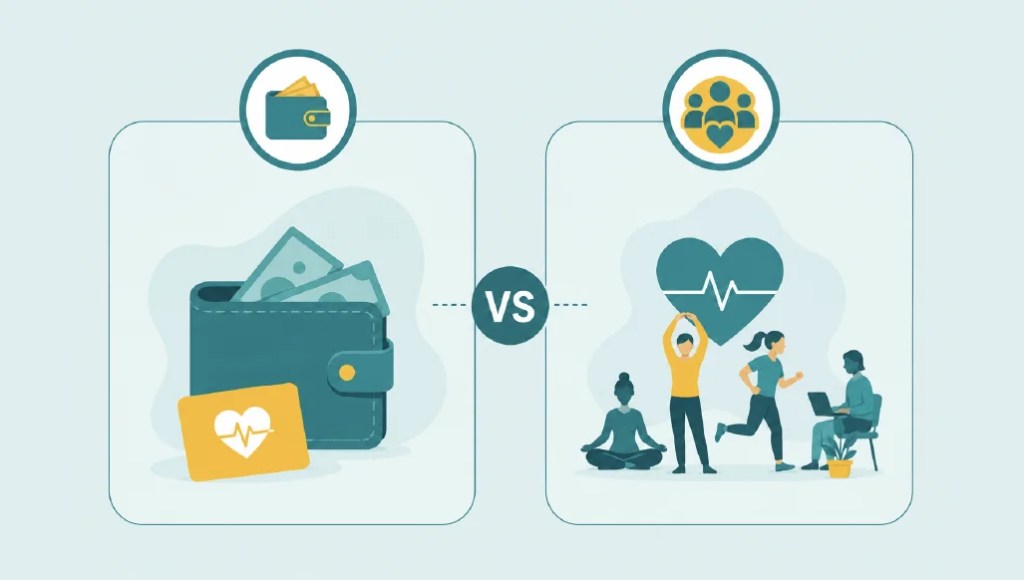
Employee wellness needs vary across roles, schedules, and work environments. As a result, many employers are rethinking how they support employee well-being. Two common approaches are an employee wellness stipend and a traditional wellness program. Both are designed to improve employee well-being, but they work in different ways. A wellness program typically provides company-sponsored activities, health resources, or organized initiatives. An employee wellness stipend provides employees with a set budget for approved wellness expenses that meet their personal needs.
The discussion around wellness allowances vs. programs has grown as employees look for benefits that offer more choice and flexibility. Some companies prefer the structure and consistency of employee wellness programs. Others see greater value in a flexible wellness benefit that allows employees to decide what wellness means to them. Many organizations also use a wellness reimbursement program to provide flexibility while maintaining clear guidelines. Understanding these employee wellness benefit models can help HR leaders make the right decision for their workforce.
What is an Employee Wellness Stipend?
An employee wellness stipend is a flexible wellness benefit that gives employees a designated amount of money to spend on approved wellness-related expenses.
Common wellness expenses include:
- Gym memberships
- Fitness classes
- Mental wellness apps
- Nutrition programs
- Home fitness equipment
- Meditation subscriptions
- Wellness coaching
Employees choose approved wellness expenses and submit them through a wellness reimbursement program.
What is a Traditional Wellness Program?
An employee wellness program takes a different approach. Rather than giving employees a spending budget, the company creates and manages wellness initiatives for the workforce.
These programs may include fitness challenges, wellness workshops, health screenings, mental health resources, employee assistance services, and awareness campaigns. Because everyone participates in the same offerings, organizations can deliver a more consistent wellness experience across teams and locations.
Structured programs help reinforce wellness goals and support different employee wellness benefit models, especially as part of a comprehensive workplace wellness program.
1. Flexibility: Wellness Stipends Give Employees More Choice
With an employee wellness stipend, employees decide how to use the benefit within approved guidelines.
Why Flexibility Matters for Frontline Workers
Frontline employees often work different shifts and schedules, making it difficult to participate in the same wellness activities. An employee wellness stipend gives employees the freedom to choose wellness resources that fit their routines and preferences. Some may use it for a gym membership, while others may prefer a meditation app, nutrition support, or home fitness equipment.
Employee wellness programs can be valuable, but participation may be limited when activities are offered at specific times, locations, or formats that are not accessible to all employees.
2. Consistency: Wellness Programs Create a Shared Experience
Traditional wellness programs create a shared experience by giving employees access to the same wellness initiatives and resources across the organization.
When Consistency Becomes an Advantage
For employers looking to drive company-wide participation, structured wellness programs can bring employees together around a common purpose.
Examples include:
- Team fitness challenges
- Mental health awareness campaigns
- Workplace wellness events
- Organization-wide well-being initiatives
Shared activities can strengthen connections and reinforce workplace wellness culture.
3. Administration: Which Option Is Easier to Manage?
Administrative requirements vary significantly between wellness stipends and wellness programs.
Wellness stipends require reimbursement management
A wellness reimbursement program typically involves:
- Defining eligible expenses
- Reviewing submissions
- Processing reimbursements
- Monitoring compliance
Wellness Programs Require Ongoing Coordination
Wellness programs involve more hands-on management because the organization is responsible for planning and running the initiatives.
This often includes:
- Planning wellness activities and events
- Coordinating with external vendors or providers
- Managing schedules and logistics
- Promoting participation among employees
- Tracking engagement and program performance
Many organizations use digital platforms to streamline administration and track participation.
4. Participation: What Do Employees Actually Use?
The success of any wellness benefit depends on whether employees find it useful and easy to access. Even well-designed programs can struggle with participation if the offerings do not align with what employees actually need.
Why Employees Often Prefer Personalized Wellness Options
Employees use wellness benefits when the options feel relevant to their daily lives. An employee wellness stipend allows employees to choose support that matches their goals, schedules, and preferences. That flexibility can improve participation, especially in organizations with diverse workforces.
5. Technology and Engagement: How Modern Platforms Bridge the Gap
Modern employee experience platforms make it easier to manage flexible wellness benefit programs at scale. HR teams can track participation, streamline administration, and offer employees a more personalized experience.
A hybrid approach may include:
- Wellness stipends for personal choice
- Company wellness challenges
- Recognition-based wellness campaigns
- Digital engagement tools
- Well-being rewards and incentives
AdvantageClub.ai helps organizations manage wellness, recognition, and engagement while providing visibility into participation and usage trends. Many employers also use recognition-based initiatives inspired by wellness ideas for employee rewards to encourage participation in wellness programs.
What Role Does AI Play in Wellness Engagement?
AI helps personalize wellness experiences using employee preferences and engagement patterns.
Some platforms use Agentic AI to:
- Recommend wellness activities based on employee interests
- Personalize benefit and wellness experiences
- Send timely reminders and engagement prompts
- Highlight participation trends and engagement insights for HR teams
AI helps employees discover relevant wellness resources while giving HR teams better visibility into participation and engagement.
6. Business Impact: Different Models Deliver Different Outcomes
The best wellness approach depends on your workforce, business priorities, and desired outcomes.
Employee wellness stipends are often a better fit for:
- Diverse workforces with varying needs
- Employees spread across multiple locations
- Organizations that value flexibility and personalization
- Individual well-being support
Employee wellness programs are often a better fit for:
- Culture-building initiatives
- Company-wide engagement efforts
- Structured participation goals
- Consistent employee experiences across teams
What HR Leaders Should Evaluate
Before deciding between a wellness stipend, a wellness program, or a hybrid approach, consider:
- Workforce demographics
- Participation and accessibility challenges
- Administrative resources and capacity
- Employee feedback and preferences
- Wellness goals and business objectives
- Technology and reporting capabilities
Organizations that align wellness investments with the realities of their workforce are more likely to see stronger participation, higher engagement, and a better overall employee experience.
Wellness Stipend vs. Wellness Program: Impact at a Glance
|
Impact Dimension |
Wellness Stipend |
Wellness Program |
|
Budget Control |
Predictable per-head cost; reimbursement-based |
Upfront vendor and event investment; variable costs |
|
Admin Load |
Expense validation and compliance monitoring |
Vendor coordination, scheduling, participation tracking |
|
ROI Visibility |
Harder to measure; distributed individual spend |
Cleaner data; easier to track participation and outcomes |
|
Scalability |
Scales easily across locations and shifts |
Requires replicating infrastructure across sites |
|
Shared Culture |
Wellness stays individual; limited team bonding |
Challenges and events build community and shared values |
|
Inclusivity |
High: employees choose what fits their life and schedule |
Fixed offerings may exclude shift-based or diverse employees |
|
Leadership Visibility |
Participation is optional and often invisible |
Programs give leaders visible ways to champion wellness |
|
Personalization |
High: employees decide what works for them |
Low to medium: limited to pre-defined offerings |
|
Participation |
Higher when employees see direct personal relevance |
Depends on program relevance and accessibility |
|
Perceived Value |
Tangible and immediately useful to the individual |
Depends on program quality and workforce fit |
|
Well-Being Outcomes |
Broad: physical, mental, and financial, based on choice |
Structured: stronger for specific organizational goals |
When comparing an employee wellness stipend with an employee wellness program, there is no one-size-fits-all answer. Many organizations find that combining both approaches provides the right balance of flexibility and engagement.
Choosing the Right Employee Wellness Stipend or Program for Your Workforce
When comparing an employee wellness stipend with an employee wellness program, there is no one-size-fits-all answer. The right choice depends on your workforce, wellness goals, and the type of experience you want to create for employees.
For employers in manufacturing, retail, and healthcare, flexibility often plays a major role. Employees work different shifts, have different responsibilities, and may not benefit from the same wellness offerings. At the same time, structured wellness programs can help build community, support shared goals, and strengthen workplace culture.
That is why many organizations are adopting a mix of both employee wellness benefit models. A flexible wellness benefit gives employees more choice, while company-wide wellness initiatives encourage participation and connection. AdvantageClub.ai brings these experiences together by connecting wellness, recognition, rewards, and engagement in one place. By balancing flexibility with structure, HR teams can build wellness strategies that employees are more likely to use, appreciate, and benefit from over time.
Is an employee wellness stipend taxable?
In many jurisdictions, wellness stipends may be considered taxable income depending on how they are structured and administered. HR leaders should seek advice from tax and legal experts for full compliance with local regulations before starting a stipend program.
What is the difference between a wellness allowance vs a program?
A wellness allowance provides employees with funds for approved wellness expenses, while a wellness program offers employer-managed wellness activities and resources. The main difference is flexibility versus structure.
Are wellness stipends effective for frontline employees?
Yes. An employee wellness stipend gives frontline employees more flexibility to choose wellness resources that fit their schedules and needs.
Can organizations offer both wellness stipends and wellness programs?
Many employers combine an employee wellness stipend with company-wide wellness initiatives to balance flexibility and engagement.
How can HR teams increase participation in wellness benefits?
Participation improves when wellness benefits are easy to access, relevant, and clearly communicated.
 Advantage Club Blogs