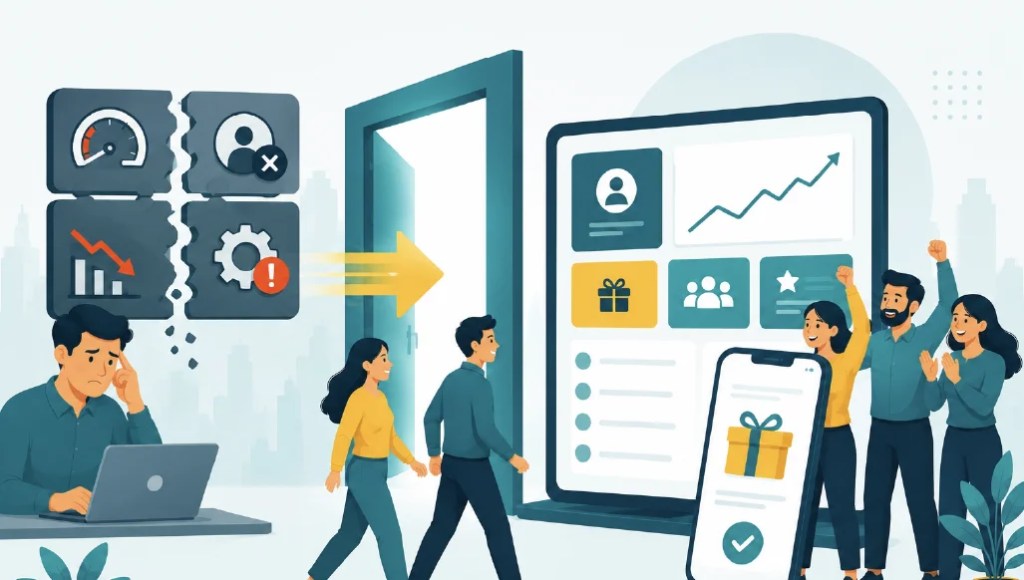
A customer loyalty program is only as effective as the technology behind it. Even the strongest strategy can lose momentum if your loyalty program platform no longer supports changing customer expectations. Slow updates, limited personalization, poor reporting, and disconnected systems can all affect the member experience. If you’re wondering whether it’s time to switch loyalty platform providers, waiting too long can cost more than making the move. With the right migration plan, you can upgrade your platform, protect member trust, and build a loyalty program that’s ready to grow with your company.
Key Takeaways
- An outdated platform can make your loyalty program less effective.
- Poor personalization, limited reporting, and integration issues are signs it’s time for an upgrade.
- Modern platforms make it easier to scale, automate tasks, and connect with other business tools.
- A well-planned loyalty program migration can happen without disrupting members.
- Keeping members informed throughout the process helps maintain trust.
- AI-powered features deliver better personalization, stronger engagement, and improved program results.
Loyalty Program Health Check: Working vs. Needs a Refresh
|
Dimension |
Signs It’s Working |
Signs It Needs a Refresh |
|
Personalization |
Offers and rewards adjust based on member behavior and preferences |
Every member sees the same generic promotions and static catalog |
|
Data & Reporting |
Leaders can pull enrollment, redemption, and CLV insights on demand |
Performance questions require manual pulls or go unanswered |
|
Technology Ecosystem |
Loyalty data flows automatically into CRM, e-commerce, and support tools |
Teams rely on spreadsheets or custom code to move data between systems |
|
Agility |
New tiers, referral rewards, or partner programs launch in weeks |
Even small changes require lengthy development cycles |
|
Member Experience |
Redemptions are fast, balances update in real time, and complaints are rare |
Support tickets rise around login issues, delays, or confusing navigation |
|
Cost Efficiency |
Spend scales with results, and ROI is easy to demonstrate |
Costs climb yearly with no measurable gain in engagement |
|
Scalability |
The platform performs the same at 10,000 or 100,000 members |
Growth introduces slowdowns, data lag, or administrative strain |
1. Your Platform Can’t Support Personalization at Scale
If every customer receives the same offers and rewards, your loyalty platform could be limiting your program’s potential.
Today’s customers expect offers based on their interests and shopping habits. Generic promotions no longer drive the same level of engagement.
Common warning signs include:
- Generic promotions sent to all members
- Limited customer segmentation
- Static rewards catalogs
- No behavior-based targeting
An advanced loyalty program platform should make it easy to deliver relevant rewards, personalized offers, and timely communications that keep members engaged and encourage them to return.
2. Reporting and Analytics Don’t Provide Actionable Insights
If your team struggles to understand what’s driving loyalty performance, your platform may be holding back strategic decision-making.
Strong reporting reveals which campaigns perform well, which rewards drive engagement, and where improvements are needed.
Key metrics leaders should easily access:
- Enrollment trends
- Redemption rates
- Active participation levels
- Customer lifetime value
- Partner performance metrics
Without clear visibility, improving program performance becomes reactive instead of strategic.
3. Integrations Have Become a Constant Headache
Your loyalty solution should connect seamlessly with the rest of your technology ecosystem. Most businesses use several tools to manage customer interactions. When your loyalty platform doesn’t share data with those systems, the customer experience becomes disconnected.
Important integrations often include:
- CRM systems
- E-commerce platforms
- Mobile applications
- Marketing automation tools
- Customer support platforms
If your team regularly depends on manual exports, spreadsheets, or custom development work, it may be time to upgrade loyalty software.
4. Your Program Can’t Adapt to New Business Goals
As your business evolves, your loyalty platform should keep pace. Loyalty programs rarely stay the same as customer expectations, products, and business priorities change. Companies introduce new products, customer segments, reward structures, and engagement initiatives.
You may want to:
- Launch loyalty program tiers
- Add referral rewards
- Introduce partner ecosystems
- Create exclusive VIP experiences
- Expand into new regions
If every modification requires lengthy development cycles, your platform may be slowing innovation rather than enabling it.
5. Member Complaints Are Increasing
Rising member complaints are often a clear sign that your loyalty program platform is no longer meeting expectations. Customers quickly notice when a loyalty program feels difficult or unreliable.
Common complaints include:
- Slow reward redemption
- Missing or delayed points
- Login and account access issues
- Poor mobile experiences
- Confusing program navigation
Every negative interaction creates friction and can reduce trust in your brand. When support tickets related to loyalty issues continue to rise, it’s worth examining whether the underlying system is contributing to the problem.
What do loyalty members expect today?
Today’s members expect:
- Fast and simple redemption processes
- Real-time balance updates
- Mobile-friendly experiences
- Personalized offers
- Consistent interactions across channels
Platforms that fail to meet these expectations can quickly lose relevance.
6. Costs Keep Rising Without Better Results
If you’re spending more each year without seeing stronger engagement, your platform may no longer be delivering value.
Many organizations focus only on licensing costs when evaluating loyalty technology. However, hidden costs often have a greater impact on ROI than licensing fees. Understanding the connection between customer loyalty and profitability makes it easier to evaluate whether your current platform is delivering long-term value.
Hidden costs may include:
- Ongoing customization projects
- Integration maintenance
- Manual administration
- Third-party software dependencies
- Technical support requirements
An older platform may appear affordable on paper while creating significant operational inefficiencies behind the scenes.
Before renewing contracts, assess the total cost of ownership and compare it with modern alternatives before you decide to upgrade loyalty software.
7. You’re Missing AI-Powered Capabilities
Organizations without AI-driven engagement risk falling behind competitors. Many of these capabilities are now considered standard AI-powered loyalty program features rather than optional enhancements.
AI is becoming a standard feature of loyalty programs. AI helps organizations understand customer behavior and automate engagement.
Advanced AI-powered loyalty capabilities include:
- Predictive reward recommendations
- Automated customer segmentation
- Personalized campaign triggers
- Churn-risk identification
- Dynamic offer optimization
Platforms that incorporate intelligent automation can help teams make faster decisions while improving member experiences. For example, solutions like Advantageclub.ai use advanced engagement technologies and Agentic AI capabilities to help organizations create more responsive and personalized loyalty ecosystems without adding operational complexity.
8. Scaling the Program Feels Impossible
If growth creates more problems than opportunities, your loyalty platform may have reached its limits. A system that works for 10,000 members may struggle with 100,000. Expanding into new markets or partner networks often exposes technology limitations.
Common scalability challenges include:
- Slow system performance
- Data processing delays
- Limited multi-region support
- Complex administration
- Restricted partner management capabilities
Your loyalty program platform should support growth without requiring a redesign as your business expands.
How to Switch Loyalty Platform Without Losing Members
A successful loyalty program migration protects member value while introducing better capabilities.
Step 1: Audit Your Existing Program
Evaluate member database quality, points balances, reward structures, and integration requirements to build a clear roadmap.
Step 2: Define Success Metrics
Decide what the new platform should achieve: better personalization, improved analytics, faster campaigns, or lower costs.
Step 3: Choose the Right Solution
Prioritize scalability, security, integration flexibility, and AI-powered functionality.
Step 4: Preserve Customer Value
Ensure points balances, tier status, and reward history all transfer over, so members don’t lose what they’ve earned.
Step 5: Communicate Early and Clearly
Share timelines, upcoming improvements, and support contact information so members understand the benefits ahead.
Step 6: Test Before Launch
Run pilots with internal teams, support staff, and select members to catch issues early.
Done right, upgrading loyalty software improves engagement, efficiency, and long-term performance. Enterprises with complex, multi-stakeholder needs are increasingly exploring platforms such as Advantage Loyalty, which offers configurable choices across customer, banking, channel/distributor, and influencer loyalty.
Future-Proof Your Loyalty Program for Long-Term Growth
Your loyalty program platform should help you build stronger customer relationships, not make them harder to maintain. If personalization feels limited, reporting no longer provides useful insights, costs continue to rise, or growth is becoming difficult to manage, it may be time to upgrade. A well-planned migration helps protect member trust while giving your business the flexibility to grow. Investing in the right technology helps you meet changing customer expectations and deliver better loyalty experiences over the long term.
What is a loyalty program platform?
A loyalty program platform is software that helps organizations run and manage their loyalty programs. It tracks member activity, manages rewards, automates engagement campaigns, and measures program performance. Modern platforms, including Advantage Loyalty, also support different stakeholder groups, such as customers, banks, channel partners, and influencers, from a single system.
When should a business switch loyalty platform providers?
It may be time to switch if your current platform struggles with personalization, reporting, integrations, or supporting a growing member base. Modern loyalty platforms offer features like AI-powered recommendations, tier-based rewards, and ERP integrations, making it easier to deliver better customer experiences and support changing business goals.
How long does a loyalty program migration typically take?
Timelines vary by program complexity, member volume, and integration needs. Most migrations take several weeks to a few months. Platforms with pre-built ERP and CRM integrations, like those offered through Advantage Loyalty, can help shorten this window.
Can members lose their points during a migration?
No. A properly managed migration transfers points balances, tier statuses, and reward eligibility in full, a standard many modern loyalty engines are built to support out of the box.
What features should businesses look for in a modern loyalty platform?
Look for personalization tools, advanced analytics, flexible reward management, scalability, security, and AI-powered automation. Platforms offering a diverse redemption marketplace, multi-tier tracking, and configurable loyalty choices across customer, banking, and partner programs – capabilities found in solutions like Advantage Loyalty tend to deliver stronger long-term engagement.
 Advantage Club Blogs