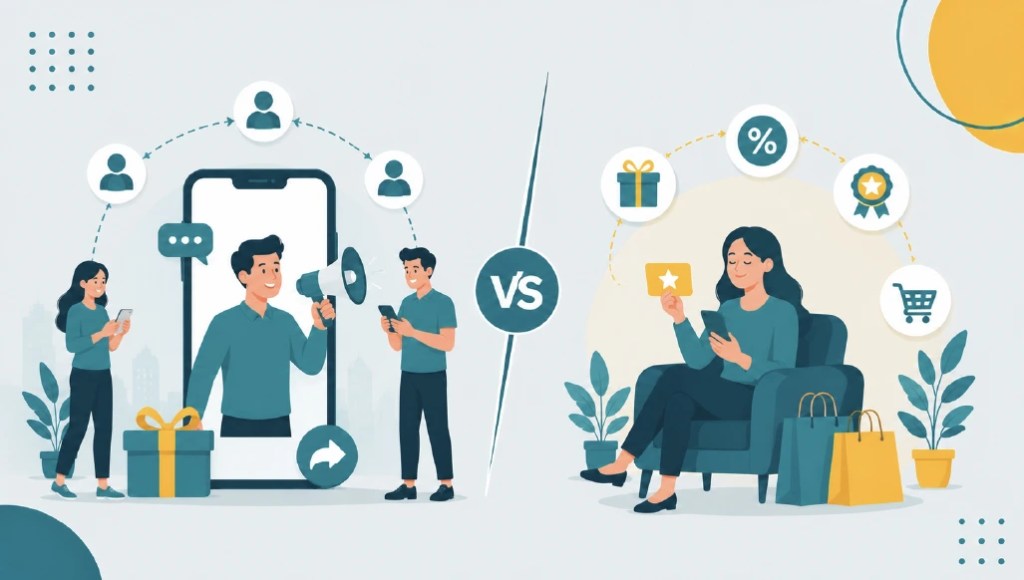
Choosing between a referral program vs loyalty program comes down to which problem you need to solve first: referral programs bring in new customers, loyalty programs keep the ones you already have. For businesses in manufacturing, retail, and healthcare, the right starting point depends on your growth goals, customer behavior, and available resources. This guide breaks down six key differences and gives you a practical way to decide which to build first.
Key Takeaways
- Referral programs primarily drive customer acquisition.
- Loyalty programs focus on increasing customer retention and lifetime value.
- The right choice depends on your current business goals and customer base.
- Referral and loyalty strategies work best together over time.
- Digital platforms make both programs easier to personalize, manage, and measure.
What Is the Difference Between a Referral Program and a Loyalty Program?
The difference between referral and loyalty program models is simple: referrals bring in new customers, while loyalty programs keep existing customers engaged. Both use rewards, but they influence different stages of the customer journey.
What Is a Referral Program?
A referral program encourages existing customers to recommend a business to friends, family, or colleagues in exchange for rewards.
Its main purpose is to bring in new customers through trusted personal recommendations.
Common rewards include:
- Discount coupons
- Cashback
- Gift cards
- Exclusive offers
- Account credits
Because referrals come from trusted sources, they often generate higher-quality leads than traditional advertising.
What is a Loyalty Program?
A loyalty program rewards customers for making repeat purchases or engaging consistently with a brand.
Its goal is to build long-term customer relationships by delivering value over time. Popular reward structures include:
- Points-based systems
- Tiered memberships
- Exclusive member pricing
- Birthday rewards
- Early access to new products
Rather than attracting new buyers, loyalty programs increase repeat business and encourage customers to choose the same brand more often, a strategy covered in more depth in different types of customer loyalty programs.
Referral Program vs Loyalty Program: 6 Key Differences
1. Customer Acquisition vs. Customer Retention
Referral programs bring new customers into your business; loyalty programs encourage existing customers to keep buying. If you need more customers, start with referrals. If you have steady traffic but low repeat purchases, prioritize loyalty.
2. Who Drives Business Growth
Referral programs rely on happy customers spreading the word. Loyalty programs motivate customers to buy more from you directly; one grows your audience from the outside, the other strengthens it from within.
3. Reward Triggers
Referral programs reward customers for successful referrals or completed purchases. Loyalty programs reward ongoing behaviors like purchases, spending milestones, reviews, and app engagement.
4. Customer Journey Impact
Referral programs influence the beginning of the customer journey. Loyalty programs become valuable after the first purchase, encouraging continued engagement.
5. Measuring Success
Referral and loyalty programs are evaluated against different benchmarks:
|
Metric focus |
Referral programs |
Loyalty programs |
|
Primary metric |
Referral conversion rate |
Repeat purchase rate |
|
Cost metric |
Cost per acquisition |
Redemption rate |
|
Growth metric |
New customer acquisition |
Customer lifetime value |
|
Engagement metric |
Referral participation |
Customer retention |
6. Long-Term Business Value
Referral programs often create faster growth by introducing new customers. Loyalty programs generate sustainable revenue by strengthening existing relationships over time, tying directly into customer loyalty and profitability. The strongest businesses eventually invest in both.
Which to Build First: Referral or Loyalty?
The answer depends on your current priorities, customer behavior, and growth stage. Work through these five steps:
- Define your primary goal: Do you need more customers, more repeat visits, or lower acquisition costs? Your answer points toward referrals or loyalty.
- Evaluate your existing customer base: Look at repeat purchase frequency, satisfaction, and how often customers already recommend you. If they’re already spreading the word naturally, a referral program can build on that. If repeat purchases are inconsistent, loyalty may deliver better returns.
- Assess purchase frequency: Businesses with frequent purchases, such as retailers and healthcare providers offering recurring services, often see quicker returns from loyalty programs. Manufacturing businesses with longer sales cycles may benefit more from referral programs instead.
- Consider budget and technology: Before launching either program, confirm you have a clear reward structure, incentive budget, customer data for personalization, and a platform to automate tracking.
- Plan for future integration: Most organizations start with one program based on immediate priorities and add the other as customer relationships mature. Our guide on how to build a customer loyalty program walks through that second phase in detail.
Which Program Fits Your Business Situation?
|
Business Scenario |
Start With |
Why |
|
Steady traffic, low repeat purchase rate |
Loyalty |
Retention is the bottleneck, not awareness |
|
New market entry or expanding customer base |
Referral |
Trusted recommendations accelerate acquisition faster than paid channels |
|
High-frequency purchase model (retail, healthcare services) |
Loyalty |
More transactions mean more chances to earn and redeem rewards |
|
Long sales cycles, channel-driven growth (manufacturing) |
Referral |
Fewer but higher-value conversions benefit from advocate-driven trust |
|
Rising customer acquisition costs |
Referral |
Lowers CAC by replacing paid channels with word-of-mouth |
|
Strong existing customer satisfaction, low advocacy activity |
Loyalty first, then referral |
Build reward habits before asking satisfied customers to advocate |
|
Limited budget and no reward infrastructure yet |
Loyalty |
Simpler to launch and measure with a single, self-contained reward loop |
Why the Best Acquisition Strategy Often Combines Both
The debate over referral marketing vs customer loyalty misses the point, the best customer acquisition strategy usually uses both. Referral marketing brings in new customers; loyalty programs keep them engaged after that first purchase. Together, they create a growth loop: a happy customer joins the loyalty program, a good experience builds trust, that customer refers others, the new customers join too, and loyalty rewards drive repeat purchases, turning customers into the next round of referrers.
Modern programs perform best when personalized and accessible across digital channels: reward delivery through mobile apps or portals, purchase-history-based personalization, automated referral tracking, milestone-based rewards, and timely redemption reminders.
Choosing the Right Technology for Sustainable Growth
A platform built for scale should offer automated reward management, customer segmentation, real-time dashboards, multi-channel communication, secure referral tracking, and engagement analytics. Solutions like AdvantageClub.ai combine personalization with analytics to help identify customer preferences and deliver more relevant rewards, with AI further automating recommendations and program tuning.
Build for Today’s Goal While Planning for Tomorrow
If acquiring new customers is your focus, start with referrals. If increasing repeat purchases and lifetime value is the goal, begin with loyalty. Over time, combining both strategies with well-run customer loyalty programs builds a stronger foundation for growth. Platforms like AdvantageClub.ai support personalized, digital-first engagement programs as your needs change.
What is the difference between a referral and a loyalty program?
A referral program rewards customers for bringing in new customers, making it an acquisition strategy. A loyalty program rewards repeat purchases and ongoing engagement, making it a retention strategy.
Which to build first: referral or loyalty?
Start with a referral program if customer acquisition is your biggest priority. Choose a loyalty program if your goal is to increase repeat purchases and strengthen existing customer relationships.
Can a business use referral and loyalty programs together?
Yes. Referral programs attract new customers, while loyalty programs encourage them to return. Together, they create a balanced strategy that supports both growth and retention.
Is referral marketing better than customer loyalty?
Neither is better on its own. Referral marketing drives new customer acquisition, while customer loyalty improves retention and lifetime value. The best choice depends on your business goals and where you are in your growth.
 Advantage Club Blogs