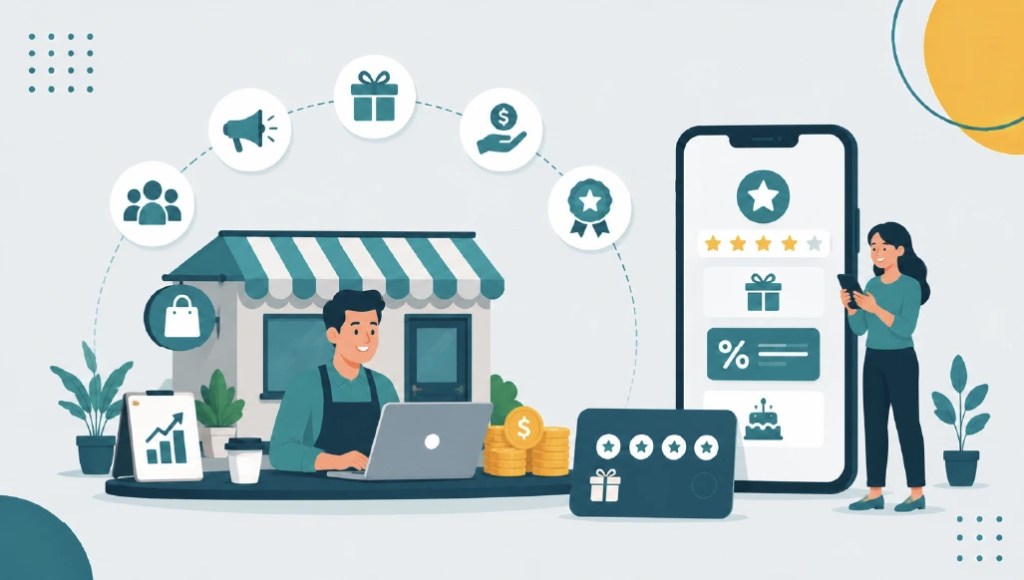
Running a successful small business loyalty program doesn’t take a big budget or complicated technology. Getting new customers matters, but getting existing customers to come back is usually cheaper and more sustainable. Many startups and growing businesses assume loyalty programs are only for large brands, but simple digital tools and thoughtful rewards can deliver real results. Whether you’re in retail, manufacturing, healthcare, or another customer-facing industry, the right loyalty strategy strengthens relationships, increases repeat purchases, and supports steady growth without a bigger marketing budget.
Key Takeaways
- A small business loyalty program can be launched with minimal investment.
- Simple, digital-first rewards often outperform complicated systems.
- Personalization increases customer participation and repeat purchases.
- Automation saves time while improving consistency.
- Measuring customer behavior helps improve loyalty efforts over time.
10 Low-Budget Loyalty Program Ideas That Actually Work
Digital-first loyalty strategies deliver the best value because they’re affordable, scalable, and easy to manage.
1. Launch a Digital Punch Card
Replace paper punch cards with digital versions using QR codes or simple mobile tools. They reduce printing costs while making rewards easier to track.
2. Offer Points for Every Purchase
Points-based rewards are easy to understand and encourage repeat purchases because customers can see steady progress toward their next reward.
3. Celebrate Customer Birthdays
Birthday discounts, bonus points, or small gifts create memorable experiences at a low cost. Personalized rewards often drive stronger engagement than generic promotions.
4. Reward Customer Referrals
Turn happy customers into promoters by offering discounts, store credit, or bonus points for successful referrals. This drives free, word-of-mouth growth while lowering what you spend to acquire new customers.
5. Introduce Simple Membership Tiers
A tiered loyalty program rewards long-term customers with increasingly valuable benefits.
For example:
- Bronze: Earn points on every purchase
- Silver: Enjoy exclusive offers and early access
- Gold: Unlock premium rewards or priority service
This structure works well as a loyalty program for startups, one of several types of customer loyalty programs worth testing, giving customers a clear reason to stay engaged.
6. Give Members Early Access
Offer loyal customers first access to new products, seasonal collections, limited inventory, or special promotions. Exclusive access costs little but feels valuable to customers.
7. Add Small Gamified Challenges
Gamification keeps customers engaged without increasing reward costs.
Simple challenges include:
- Make three purchases this month
- Refer a new customer
- Shop during a seasonal campaign
- Complete a product review
Reward completed challenges with bonus points or exclusive offers to encourage repeat engagement.
8. Use QR Codes for Easy Participation
QR codes simplify enrollment and reward tracking while reducing administrative work.
Customers can quickly:
- Join the loyalty program
- View rewards
- Redeem points
- Access special offers
It’s one of the easiest low-budget loyalty program ideas for businesses seeking a digital experience without a dedicated app.
9. Personalize Offers Using Customer Data
Customers respond better to rewards based on their buying habits than to generic promotions.
Examples include:
- Discounts on frequently purchased products
- Personalized birthday rewards
- Offers after repeat purchases
- Product recommendations based on purchase history
As your business grows, platforms like AdvantageClub.ai can help automate personalization. AI can further streamline recommendations while keeping the customer experience relevant.
10. Build a Community Around Your Brand
Loyalty isn’t driven by discounts alone. Customers are more likely to return when they feel connected to your brand.
Build engagement through:
- Exclusive online communities
- Customer appreciation events
- Social media contests
- Feedback programs
- VIP newsletters
These efforts strengthen customer relationships while encouraging repeat purchases and building real brand loyalty and customer experience.
Why Every Small Business Needs a Loyalty Program – Even on a Small Budget
Winning a new customer typically costs more than encouraging an existing one to return. A loyalty program gives customers an extra reason to keep choosing your business instead of exploring competitors, and it doesn’t take a big-company budget to work.
Why Retention Matters More Than Constant Acquisition
Repeat customers buy more frequently, spend more over time, refer others, and build long-term brand trust. Focusing on retention creates sustainable growth while reducing dependence on continuous advertising.
Common Misconceptions
Many small businesses assume loyalty programs require large budgets, that customers only care about discounts, or that manual tracking is too difficult to manage. In reality, today’s digital tools make even a simple DIY loyalty program practical for startups and local businesses.
How to Build a Small Business Loyalty Program
- Define your objective. Decide whether the goal is more repeat purchases, referrals, higher average order value, or stronger long-term relationships. A focused objective makes every later decision easier.
- Understand buying behavior. Look at purchase frequency, preferred products, seasonal patterns, and average spend. These insights help you design rewards that customers actually value, rather than generic incentives.
- Choose a simple reward structure. Points for purchases, digital punch cards, referral rewards, and tiered memberships all work well; our full guide on how to build a customer loyalty program covers this step in more depth. Customers should be able to understand how to earn and redeem within seconds.
- Promote the program everywhere. Email, SMS, QR codes at checkout, website banners, and printed receipts all drive awareness. A program customers don’t know about won’t get used.
Affordable Tools That Help You Do More With Less
Businesses with a smaller customer base often start with spreadsheets, free email tools, or point-of-sale systems with basic loyalty features. As the customer base grows, manual tracking gets harder to sustain, and an affordable loyalty platform with automated tracking, segmentation, and reward redemption becomes worth the investment, a natural next step in loyalty program management. Platforms like AdvantageClub.ai combine automation, personalization, and analytics to help small businesses scale loyalty without adding administrative work.
Long-Term Business Impact
A well-designed loyalty program compounds over time: higher customer lifetime value, more repeat purchases, increased referrals, and stronger brand reputation. Even simple programs generate customer data that helps refine offers as the business grows.
Choosing the right starting point depends on your budget and customer base; the table below outlines which approach fits best.
Which Tool Fits Your Growth Stage?
|
Business Stage |
Recommended Tool |
Typical Monthly Cost |
Best Reward Type |
|
Pre-launch / very small (under 100 customers) |
Spreadsheet + manual tracking |
$0 |
Punch card or flat discount |
|
Early stage (100–500 customers) |
Free email marketing tool with tags |
$0–20 |
Points for purchases |
|
Growing (500–2,000 customers) |
POS with built-in loyalty add-on |
$20–75 |
Tiered rewards |
|
Established (2,000+ customers) |
Dedicated loyalty platform |
$75–300+ |
Personalized, AI-driven offers |
Start small, measure what customers actually redeem, and scale your tools as the program proves its value; platforms like AdvantageClub.ai can support that growth once manual tracking starts to strain.
Build a Small Business Loyalty Program That Grows With You
Building a small business loyalty program doesn’t require a large budget or complex technology. Start with simple rewards, deliver consistent value, and refine your approach using customer insights. As your business grows, platforms like AdvantageClub.ai can help automate personalization and scale customer engagement. Small, consistent improvements today can build stronger customer loyalty programs and sustainable growth tomorrow.
What is the best small business loyalty program?
The best small business loyalty program matches your customers’ buying habits while remaining simple to join and easy to use. Points programs, digital punch cards, referrals, and tiered rewards are all effective options.
Can I create a DIY loyalty program without software?
Yes. A DIY loyalty program can be managed using spreadsheets, QR codes, email marketing tools, or POS systems with built-in loyalty features. As your customer base grows, automation can improve efficiency.
What rewards work best for small businesses?
Practical rewards such as discounts, bonus points, birthday offers, referral bonuses, free products, and early access encourage repeat purchases. Keep rewards easy to earn and redeem.
How much does an affordable customer loyalty program cost?
An affordable customer loyalty program can begin with free or low-cost digital tools. Many businesses start with existing software and upgrade to dedicated platforms as they grow.
How do I know if my loyalty program is successful?
Track repeat purchases, customer retention, referrals, reward redemption, average order value, and participation rates. Reviewing these metrics regularly helps you optimize program performance over time.
 Advantage Club Blogs