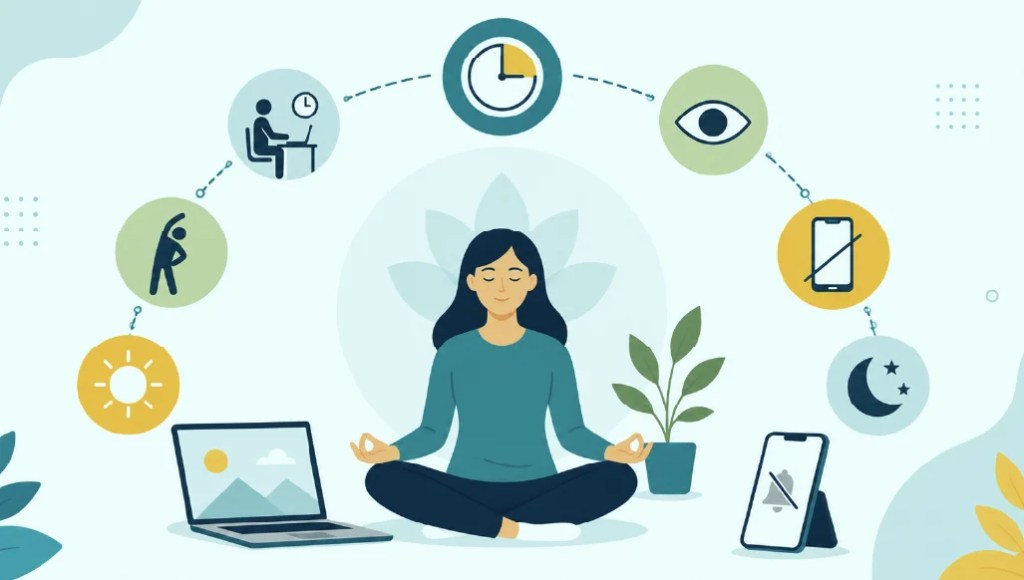
Digital wellness at work means helping employees use technology in ways that support productivity without compromising their wellbeing. As workplaces become increasingly connected, many employees struggle with screen fatigue at work, constant notifications, meeting overload, and difficulty disconnecting after work. These challenges are no longer just technology issues; they affect employee experience, engagement, morale, and retention. By redesigning digital work practices and personalizing support, HR leaders can create healthier workplaces without slowing business operations, an increasingly core part of any employee wellness program.
What Is Digital Wellness at Work and Why Does It Matter?
Digital wellness at work means creating healthy, sustainable ways for employees to use digital tools without harming wellbeing, productivity, or work-life boundaries.
Digital tools should simplify work, not create constant pressure. While technology enables collaboration and flexibility, excessive meetings, notifications, and platform switching often lead to digital overload.
Strong workplace digital wellbeing benefits:
- HR managers and people leaders
- Floor supervisors and frontline workforce leaders
- Hybrid and remote teams
Organizations that prioritize digital wellness often see:
- Better focus and productivity
- Lower burnout risk
- Higher engagement
- Improved employee experience
- Stronger retention
How to Improve Digital Wellness at Work: 8 Practical Strategies
Organizations improve digital wellness by reducing unnecessary digital friction while giving employees greater control over how they work.
1. Audit Digital Workloads Before Adding More Tools
Before introducing new software, evaluate existing digital workflows.
- Remove duplicate platforms.
- Reduce unnecessary notifications.
- Consolidate communication channels.
Simpler digital ecosystems reduce cognitive overload and improve productivity.
2. Create Healthy Communication Expectations
Clear communication norms help employees focus rather than constantly react.
- Define realistic response times.
- Improve meeting etiquette.
- Set notification guidelines for managing screen time at work.
Employees gain more uninterrupted time for meaningful work.
3. Build a Right to Disconnect Policy That Employees Actually Use
A right-to-disconnect policy works only when leaders model the behavior.
- Clarify after-hours expectations.
- Avoid non-urgent evening messages.
- Respect weekends and leave.
Healthy boundaries improve both wellbeing and long-term performance.
4. Replace Constant Monitoring with Better Outcomes
Measuring online activity doesn’t always improve results. Instead, evaluate:
- Quality of work
- Goal achievement
- Collaboration
- Customer impact
Trust-based performance management encourages healthier digital habits while maintaining accountability.
5. Personalize Digital Wellbeing Instead of Using Blanket Rules
Employees have different schedules, communication styles, and workloads. Personalized engagement helps organizations offer flexible support that employees are more likely to adopt. Focus on:
- Flexible communication preferences
- Employee Experience Enhancement
- Employee-Centered Solutions based on individual needs
Personalized approaches create healthier digital habits without disrupting productivity.
6. Encourage Small Daily Digital Detox Moments
A digital detox for employees doesn’t require disconnecting for hours. Small breaks throughout the day can make a meaningful difference. Simple practices include:
- Meeting-free focus blocks
- Notification-free work periods
- Walking discussions instead of video calls
- Short screen breaks between meetings
These habits reduce mental fatigue, improve concentration, and help employees return to work with more energy.
7. Recognize Healthy Work Habits—Not Just Long Hours
Recognition programs should reward sustainable performance rather than constant availability. Celebrate employees who:
- Deliver quality outcomes
- Collaborate effectively
- Respect healthy work boundaries
- Support teammates without creating unnecessary urgency
Consistent employee recognition reinforces the message that results matter more than being online all day, the heart of any genuine appreciation culture at work.
8. Continuously Measure Employee Experience
Digital wellness is an ongoing effort, not a one-time initiative. Regular feedback helps organizations understand what’s working and where employees need more support. Useful methods include: Useful methods include:
- Pulse surveys
- Employee feedback sessions
- Digital workload reviews
- Team check-ins
Continuous listening helps HR refine wellbeing initiatives as part of a comprehensive workplace wellness program, not a one-off campaign.
How AI Personalization Makes Workplace Digital Wellbeing Sustainable
AI enables organizations to personalize digital wellness without increasing HR workload.
Manual wellbeing programs are difficult to scale across large workforces. AI identifies communication patterns, workload trends, and engagement signals to recommend healthier work habits.
Modern employee experience platforms use preference data, motivation insights, and flexible rewards to create more relevant experiences for each employee.
Where Agentic AI Fits Next
Looking ahead, AI can recommend healthier work rhythms, improve meeting schedules, and deliver timely recognition nudges. Rather than replacing managers, it helps them make better calls through personalized recommendations.
Why “Always-On” Work Culture Is Becoming a Business Challenge
The always-on work culture develops through everyday habits rather than formal policies. Common examples include:
- Late-night emails becoming normal
- Expecting immediate replies
- Back-to-back virtual meetings
- Constant notifications interrupting work
When availability becomes the measure of commitment, employees struggle to disconnect. Healthy cultures encourage timely collaboration while respecting personal boundaries, the same principle behind organizational culture and employee engagement more broadly.
Matching Digital Wellness Fixes to Workforce Segment
Screen fatigue doesn’t have one root cause; it looks different depending on the role, and the fix that works for one segment often does nothing for another. Instead of applying a single wellness policy company-wide, HR teams get better results by pairing each workforce segment’s actual fatigue driver with a targeted intervention:
|
Workforce Segment |
Primary Fatigue Driver |
Highest-Impact Fix |
|---|---|---|
|
Corporate/office teams |
Meeting overload, tool-switching |
Meeting-free focus blocks, platform consolidation |
|
Manufacturing supervisors |
Mobile updates layered onto floor duties |
Shift-based, mobile-first communication windows |
|
Retail managers |
Real-time scheduling + customer messaging |
Batched off-hours alerts, streamlined scheduling tools |
|
Healthcare administrators |
Heavy documentation and compliance systems |
Notification triage, workflow automation for repeat tasks |
|
Hybrid/remote teams |
Video-call fatigue, blurred work-life lines |
Camera-optional norms, protected offline hours |
Not Everyone Needs the Same Digital Wellness Strategy
One policy cannot meet every employee’s needs. Effective programs consider:
- Communication preferences
- Individual energy patterns
- Flexible work styles
- Different motivational drivers
Organizations are increasingly designing wellbeing programs around how people actually want to work, not generic one-size-fits-all policies.
Building a Digital Wellness Culture That Works Across Every Workforce
Tailored initiatives improve morale, productivity, retention, and employee experience. Organizations can strengthen these efforts through regular feedback, recognition, and a genuinely better day-to-day experience. Platforms like AdvantageClub.ai support this by combining engagement, wellbeing, and AI-powered personalization.
Technology should reduce friction, not create it. Combine flexible work practices, consistent recognition, continuous feedback, and AI-powered personalization, and digital fatigue drops while employee wellbeing goes up.
Rather than relying on annual wellness campaigns, HR leaders should continuously evaluate how employees experience digital work. AdvantageClub.ai shows how personalized engagement, recognition, and AI insights can help build healthier, more productive workplaces.
Frequently Asked Questions
What is digital wellness at work?
Digital wellness at work is the practice of helping employees use digital tools in healthy, sustainable ways that improve productivity while protecting wellbeing, focus, and work-life balance.
How can HR reduce screen fatigue at work?
HR can reduce screen fatigue by simplifying digital workflows, setting communication norms, encouraging regular breaks, limiting unnecessary meetings, and personalizing wellbeing initiatives.
What is a right to disconnect policy?
A right to disconnect policy defines when employees are not expected to respond to work messages outside working hours, helping create healthier work-life boundaries.
What are simple digital detox ideas for employees?
Meeting-free focus blocks, notification-free work periods, walking meetings, and short screen breaks are practical ways to introduce a digital detox for employees without affecting productivity.
How can AI improve workplace digital wellbeing without increasing HR workload?
AI analyzes work patterns, identifies digital overload, and delivers personalized recommendations, enabling HR teams to improve workplace digital wellbeing without manually managing every employee’s needs.
 Advantage Club Blogs